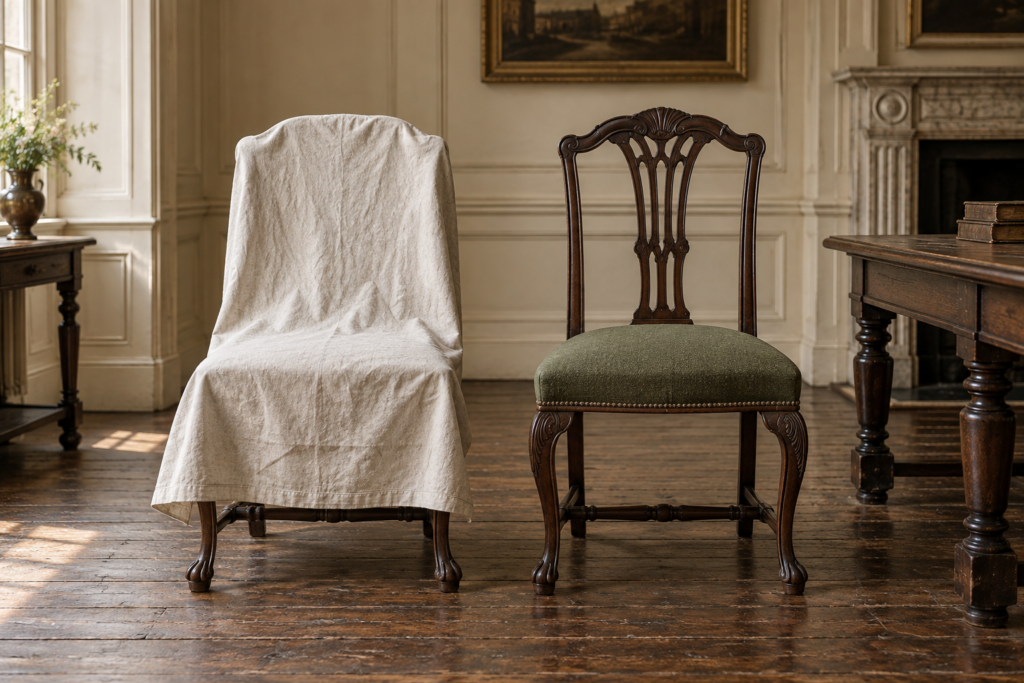
The surviving papers contain an instruction for the re-covering of twelve chairs in a cloth described as “the existing green”.
No sample was enclosed.
The upholsterer asked which of the twelve greens was intended. The chairs had spent several decades in different parts of the House. Those nearest the windows had acquired a pale, almost silvery appearance. Those beside the fireplace had become darker. The chair ordinarily occupied by the Treasurer appeared to have avoided both daylight and unnecessary movement.
The Committee replied that the differences were not material.
The upholsterer observed that they were entirely material.
The chair retained
It was eventually agreed that eleven chairs would be re-covered and the twelfth retained for comparison. The retained chair was placed beneath a linen cover and labelled “Original”.
This designation was administrative. An earlier account suggested that the chair had already been re-covered twice, although one of the payments might have concerned a footstool.
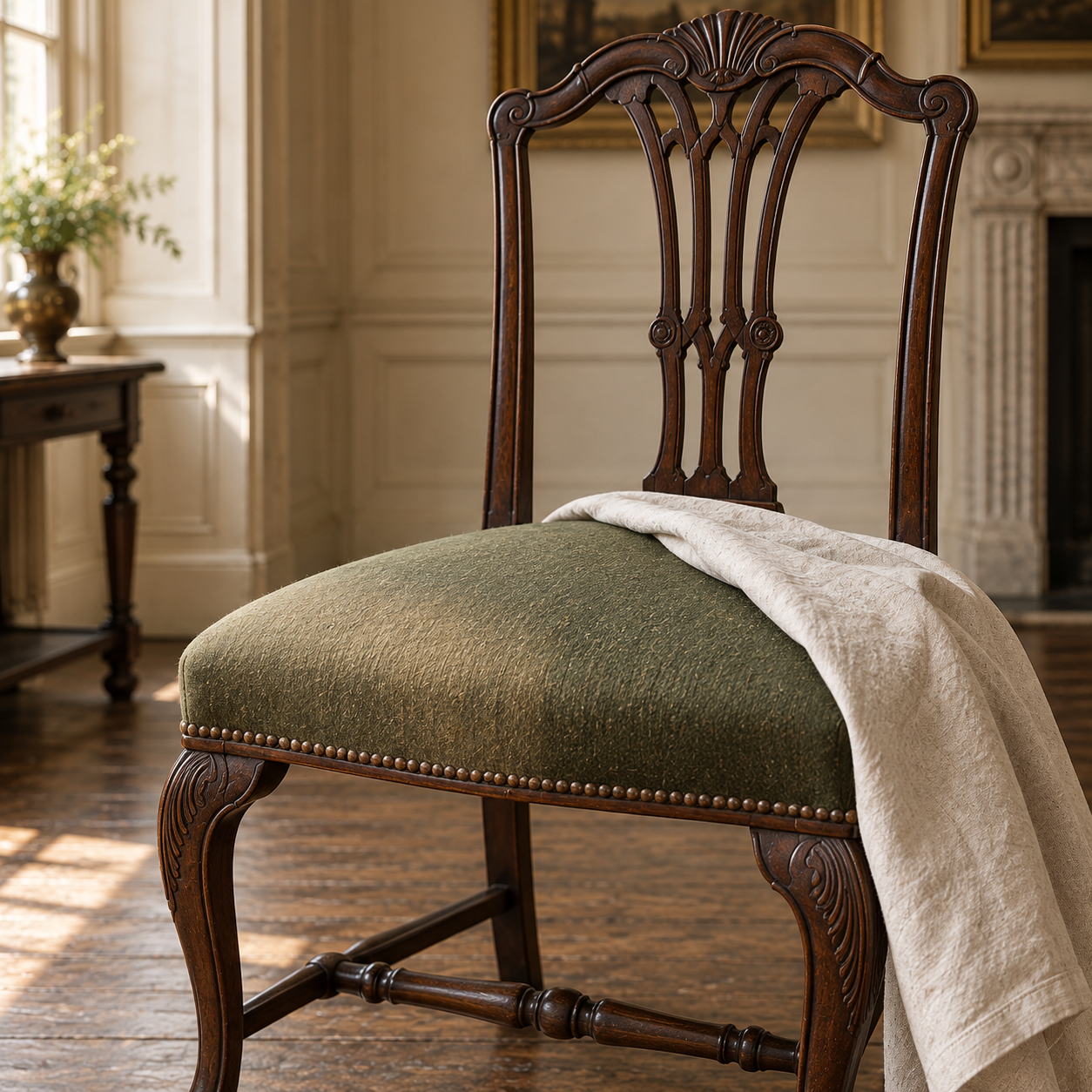
The new cloth was selected from a sample examined in daylight. The upholsterer's accompanying note advised that its appearance would vary with the light and the direction of the pile.
The note was filed under Delivery.
The inspection
When the eleven chairs returned, the Committee assembled after dinner to compare them with the twelfth.
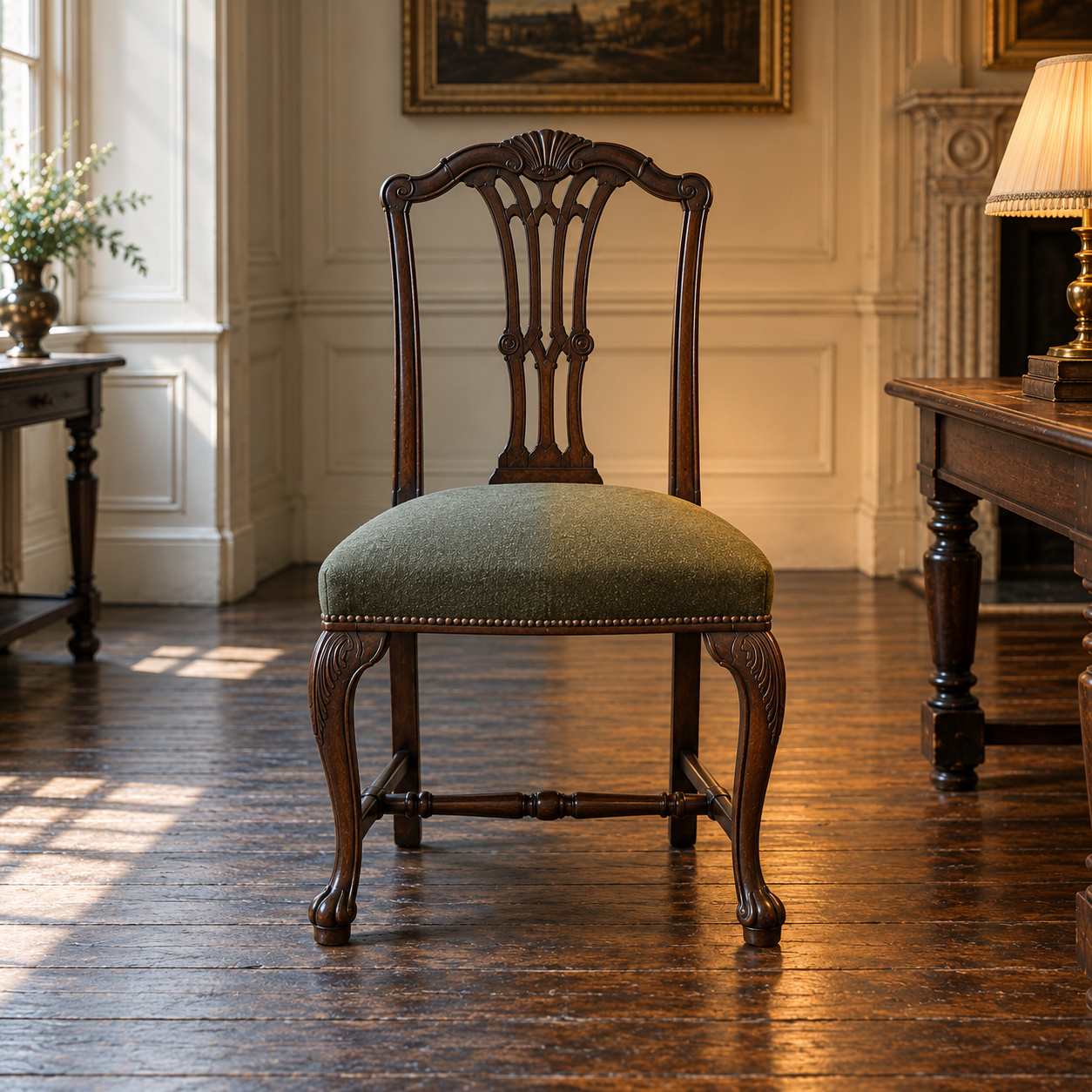
Under electric light, the new green was judged too blue. Moved beside the fire, it was judged too yellow. One chair was turned to face the opposite wall and was immediately considered a better match.
The upholsterer requested a morning inspection.
The Committee agreed to consider mornings at its next evening meeting.
A second inspection was held during a bright afternoon. On this occasion the new chairs were pronounced satisfactory, with the exception of the retained chair, which now appeared to be the wrong colour.
It was proposed that the twelfth chair should also be re-covered. This was opposed on the grounds that it would leave nothing against which the other eleven could be judged.
It was then proposed that one of the eleven should be retained as a sample of the new work. This was opposed on the grounds that the House would possess two chairs which could not be used, and ten whose use might alter the evidence.
The settlement
The final minute records a compromise.
All twelve chairs were returned to use. The cloth sample was kept in an envelope. Future differences were to be attributed to the light unless there was evidence to the contrary.
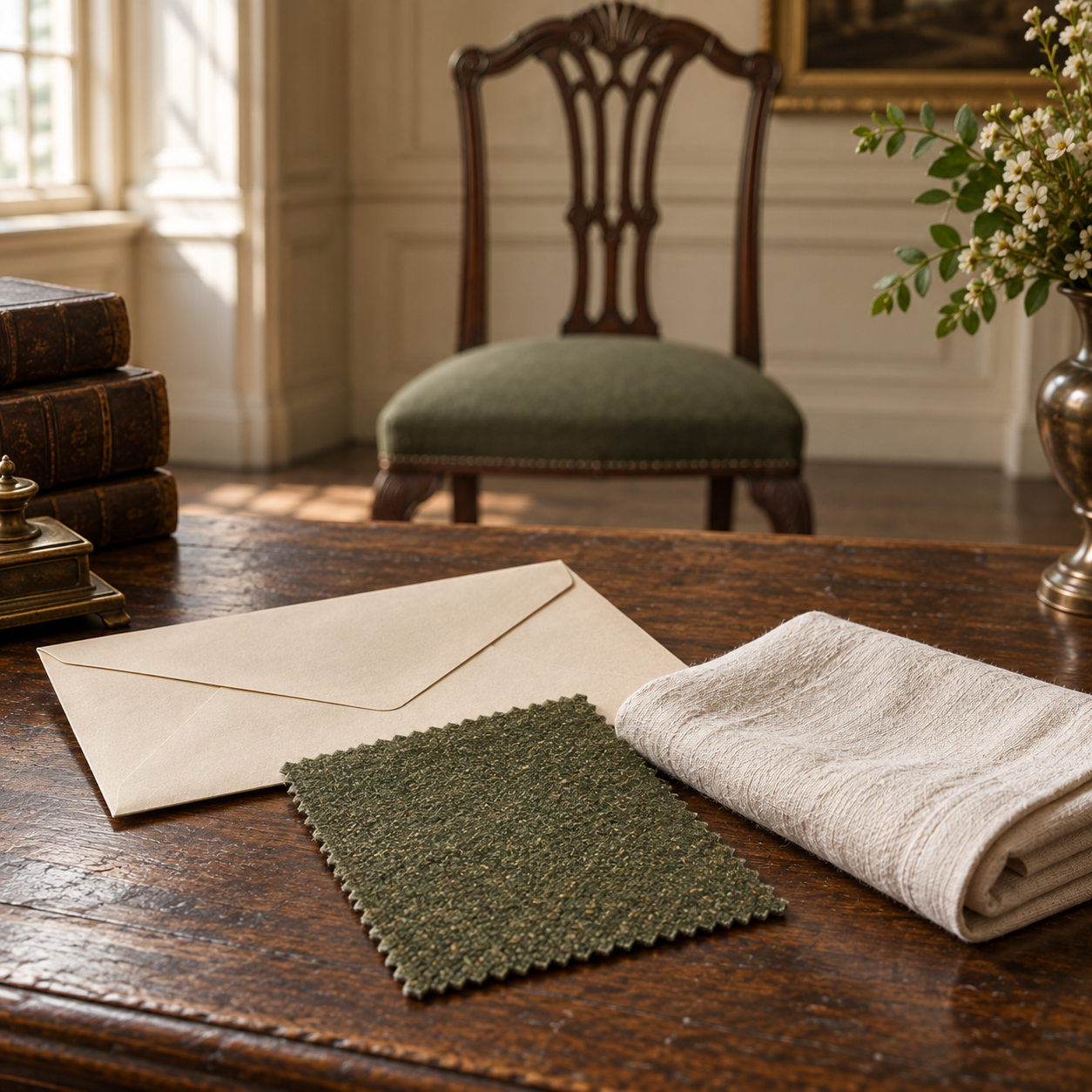
The workmanship was approved. The afternoon was not.
A later pencil note beneath the minute states that the linen cover was an excellent green and asks whether any more of it could be obtained.
No reply has been identified.
Recent Comments